Corbin's Treehouse - Corbin Dunn, Santa Cruz, CA
Plug Bug
Treehouse
Photography
Videos
Shop
Unicycling
About

Archive for May, 2010

Broken Handlebar Repair

Monday, May 31st, 2010

While in New Zealand, I broke the handlebar on my KH24. The thin tubing failed due to too much stress on the joint. The braze held up fine, and it broke right above it. While in NZ, I quickly re-welded it together (temporarily) with a MIG welder and a face shield that I totally couldn’t see out of. The result was a weld that held up for a few months..but that was about it. So, it finally broke again.

IMG_8794.jpg

I cut the bad part off the handlebar part and ground some of the paint away. Notice the replacement tube in the right.

IMG_8795.jpg

I took off the part that attaches to the seat post and ground off the junk:

IMG_8798.jpg

The fix is a larger diameter tube that the regular one can slide into. It is thicker, and should make it last longer. I cut a 45 in the tube (NOTE after using it: 40 degrees, or less, would have been better):

IMG_8801.jpg

After a few swipes of a 1/2 round file I had a fishmouth that fit perfectly:

IMG_8803.jpg

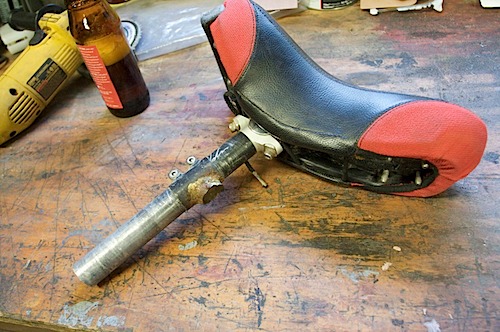
I braze it together and powder coated it red:

IMG_8807.jpg

The angle is a little too steep, but it works again!

IMG_8809.jpg

Plug Bug: Tie rods and axle bolts

Saturday, May 29th, 2010

I’m installing disc brakes on the bug, as they will help me stop faster in the event of an emergency. I figured this would be an easy project, but I also ended up getting lowered drop spindles and a 2″ shorter front beam (I think dropped bugs look cool).

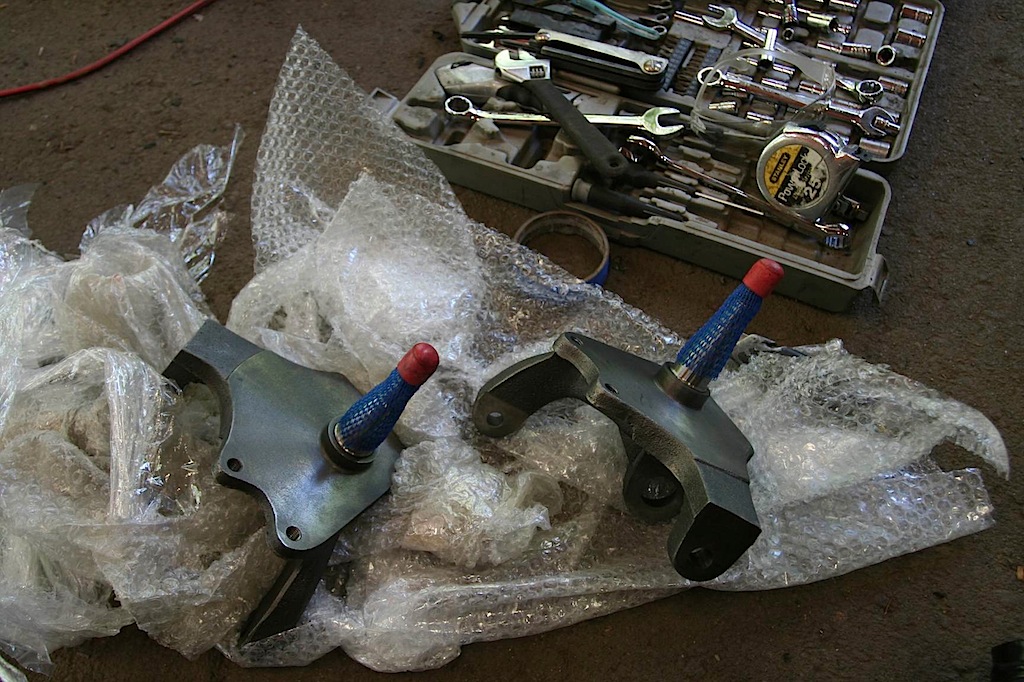
The spindles:

IMG_8739.jpg

It turns out, I need a special VW tool to remove the tie rods. So, it’s back to California Imports and buying more stuff so I can take these things off:

IMG_8777.jpg

I then figured I’d put back on the front tires and install the rear disc brakes. Well, I quickly learned it is a pain in the ass to remove the 36mm axle bolt:

IMG_8783.jpg

So…I’ll have to order another tool for that job.

So, in the end, I didn’t get much work done today… Oh well!

Plug Bug: Battery Box Simulation

Saturday, May 29th, 2010

(Another old post — I’ve been having trouble uploading pictures from home).

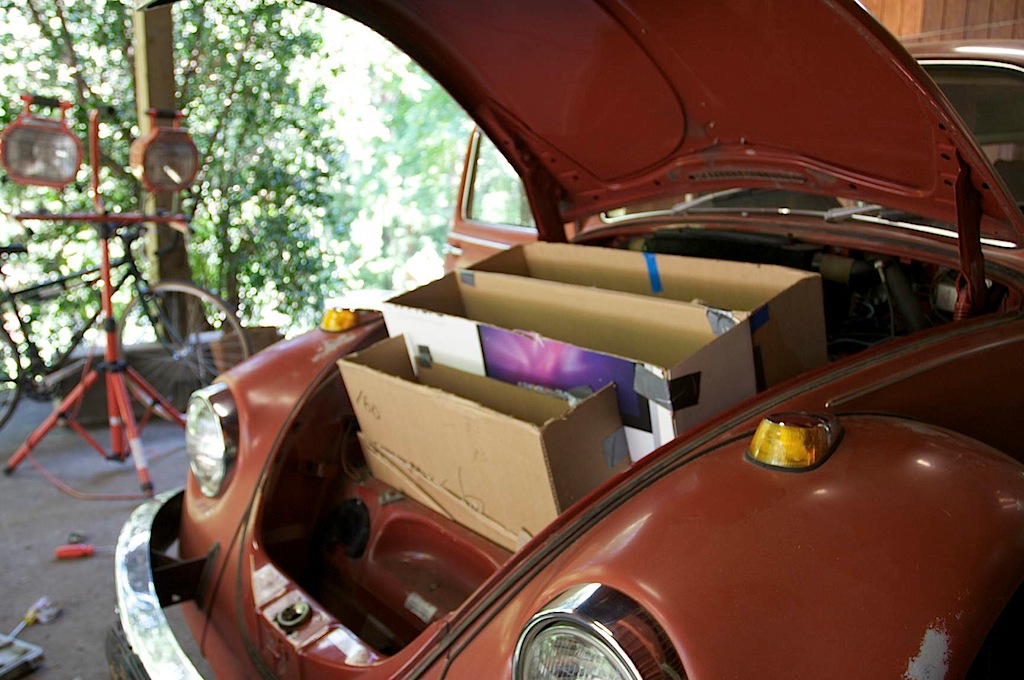
The best way to see if the batteries will fit is to do some mock ups. I made some crude ones out of cardboard boxes. Here’s where I plan to put some of the front cells:

IMG_8517.jpg

And the rear:

IMG_8519.jpg

I may end up modifying the rear seat slightly to hold two more cells in a more square and uniform pattern.

Plug Bug: Power/Energy Required

Saturday, May 29th, 2010

This is an older post I never ended up publishing. Basically it is my process of how selection and research — especially with my particular commute and the hills I have to tackle.

How much energy will my bug need for what I want it to do? How do I figure this out? I started out on the DIYElectricCar Forums/Wiki page - How Much Power Will I need? This left a lot of unanswered questions, mainly because my physics is now 10 years old and rusty. So, I dug through some of my old books and read a bunch of stuff online and started making a spreadsheet in Numbers on my Mac. Strangely, I was re-reading a page from my old physics book and then ran into that same exact article on the web: “Topic 2: Automotive Power”.

I also discovered a few other people had made good spreadsheets, but it was still good practice to make my own. The ones I found:

The Electric Auto Association of Nevada has one made by tomofreno. Awesome.

Cameron Software has the first one I came across (click on “Drive Power”).

EVConvert – an online spreadsheet calculator.

Using these as guides, I made my own; I’ll post it when I finally stop tweaking on it.

Now, I have about a 20 mile commute from the mountains to Apple. (The bottom of the chart to B on the left of the chart). But, I frequently go to Planet Granite to climb and want to be able to add that into my daily driving. I want to do this complete route, without charing. But, I’m hoping that normally I will charge at work. The total distance is nearly 52 miles (normally 40 miles if I don’t go to the gym). That’s pretty tough for a homebuilt EV with the giant hill.

map to work small.jpeg


Part of the problem is Highway 17. It is steep roughly a 4.5% average grade from Los Gatos to the top. I am upping it to 5% to round up for my number estimates. I want to be able to maintain the normal speed, about 50-55 mph (I’m shooting for 55mph).

I mapped it with iMapMyRide: http://www.mapmyride.com/ride/united-states/ca/san-jose/376127181995643458

Elevation profile:
Screen shot 2010-04-23 at 10.31.35 PM.png

It takes 33kw (44hp) of power to get up that hill, and has to sustain it for at least 7 minutes at 55 MPH to get me to the top. I need a motor rated for at least this. That eliminates a lot of options — especially the lower priced AC options like the Azure Dynamics AC24 and HPEV’s AC50. One of the troubles I had with DC motor selection is that they usually have charts at really low voltages (72V), so I don’t know how they will perform at higher voltages (ie: 154V). The WarP 9 is rated up to 170V.

Plug Bug: Interior Out and Rust in Back

Thursday, May 27th, 2010

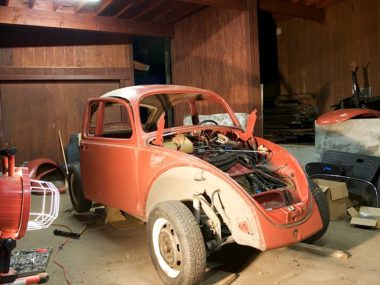
The project is slowly moving along. I’m working on restoring the car and took most exterior stuff off in preparation for body repair and paint.

IMG_8725.jpg

I’m planning on upgrading to disc brakes and lowered spindles to drop the front a little bit.

I’ve been taking a lot of pictures as I go; mainly so I can remember how it all goes back together!

IMG_8499.jpg

The worst amount of rust is the luggage compartment behind the back seat. After I pulled the carpet away I noticed there were holes rusted through. I’m planning on building battery boxes here, and instead of ordering a new panel (only about $200) I’m going to weld in some sheet steel and cut out the rusty part:

IMG_8509.jpg

IMG_8511.jpg

I originally was going to cut pieces out, but I think one big piece will be easier.

IMG_8611.jpg

The floor pan has a little bit of rust that I cleaned up with some sander wheels on the grinder. It doesn’t seem bad enough to warrant replacement — there aren’t any holes, and it doesn’t have any signs of rusting through. That’s good news, as I didn’t want to have to deal with replacing it.

IMG_8622.jpg

I’m a little behind on the blog. This is what it looked like a few days ago.

IMG_8634.jpg

Plug Bug: Battery Research

Friday, May 21st, 2010

How far can I go? That depends on how fast you want to go, and how many hills you hit. Here’s some great info on the diy forums that got me started. I want to go 100 miles at 65mph (excluding hills and acceleration, for simplicity). Realistically, that probably won’t happen because it will cost too much and take up too much space (and too much weight!)

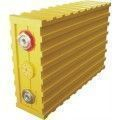
201005021312.jpgI’m going with a 154V DC system and 48 Thundersky Lithium Iron Phosphate batteries. The nominal volts per lithium battery is 3.2 V. What Ah do I need per cell? At 65mph on flat ground will consume about 23kW of power (31Hp). 100 miles at 65 mph = 1.54 hours, or 1 hr 32 minutes. 23kw*1.54 = 35.4kw needed. 35,400 watts / 154 v = 230Ah. We want to only run the pack to 80% “Depth of Discharge” (DoD) to avoid killing the pack too early. So, at 230Ah I need 230Ah* 1.2 = ~275 Ah cells to make it work (roughly). I’m actually planning on using 200Ah cells (due to size and cost), so I won’t be able to get that far. Also note that batteries have cycle life associated with them– you get more cycles and more life depending on how far you discharge the pack, and how fast you discharge a pack (the C rating). From my research, it appears that 1/2 C is the best rating for the maximum cycle life, but are usually rated continuous at 2C. I’ll be pulling less than that, so I should be okay.

With the 48 3.2V 200Ah cells I will have 154V, and 154V*200Ah*80% = ~25kW of available energy in my pack. That means I should be able to do about 71 miles based on 35kW to maintain 65mph (ignoring acceleration and any other factors). A little less than I wanted, and I’m really hoping it is enough to do 50 miles (round trip), including my “hill” so I can commute to work / gym / home and charge at work only. Otherwise, I’ll be dependent on charging at work and home, which won’t be a big deal.

Real life “Watts per mile” is another good estimate of range. Travis (who has a nice conversion I mentioned before) said he gets about 250Watts/mile when driving conservatively. Based on that, and 80% DoD, I could get up to a 98 mile range. That likely won’t happen, but would be cool. A 300W/mile estimate would give me an 82 mile range. My calculations are probably conservative, as I used higher values to not get my hopes too high. I’m excited to actually get my project together and find out what real data I actually get.

I’ve basically gone from zero EV knowledge a month ago to knowing “a little bit”. I’m still learning as I go…

Plug Bug: Final motor selection

Friday, May 21st, 2010

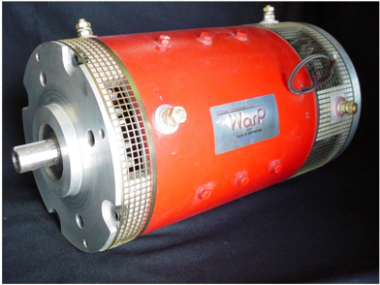
After lots of research, I finally decided on a DC motor. I really want to have an AC system, but I have several issues: 1. Cost — it is at least 3k more, possibly a lot more. 2. Availability — not many AC retailers sell to the individual, or, if they do it is really expensive. 3. The EVE AC40 motor I wanted to use uses the MES-DEA controller, which looks difficult to work with — especially for my first time doing a conversion. 4. DC has been done so often and there is a huge community of people I can ask questions to. That is really valuable to me, as I’m learning a lot as I go.

I’m planning on using the following major components:

* Netgain WarP 9 DC motor

Screen shot 2010-05-21 at 6.36.34 AM.png

* Netgain WarP-Drive Controller

Screen shot 2010-05-21 at 6.47.44 AM.png

* 48 Thundersky 200Ah Lithium Iron Phosphate batteries. 3.2 volts nominal per battery for 154V pack.

201005210649.jpg

Tandem Unicycle Practice

Tuesday, May 11th, 2010

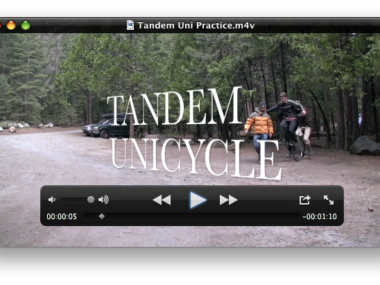
I brought the tandem unicycle with me to Yosemite this past weekend weekend. I was hoping Louise and I would get a chance to ride it, but she was sick all weekend and it started raining/hailing/snowing. Luckily Scott Bond and I practice a bit before the storm set in. Here’s a shot video I made of the footage. Enjoy!

Screen shot 2010-05-11 at 7.43.40 PM.png

Click above for the large version, 37 MB, H.264 encoded.

Also available: Tandem Uni Practice – small version at 8 MB.

Also available on YouTube:

Plug Bug: More motor comparisions

Monday, May 10th, 2010

I’m trying to figure out the best motor for my project. I’m now down to considering the EVE AC30 (or AC40) versus the DC WarP 9.

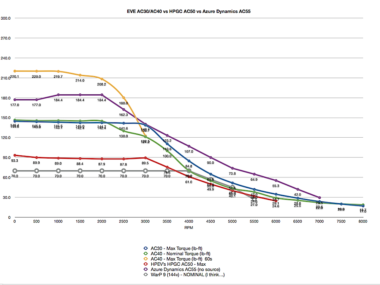
The WarP 9 data is all given at 72v rated on the dyno by Netgain; I simply doubled the RPM and assume the torque output is the same up until about 4000 RPM; I’m not sure if that assumption is correct.

Here’s a graph of Torque vs RPM for the various motors:

Screen shot 2010-05-10 at 4.47.51 PM.png

I know the HPGC AC50 will be underpowered for what I want, but this chart makes it look like the WarP9 is also underpowered. However, this at ~260 amps — more amps will give more power, but it is a question of how long can the motor take that.

UPDATE: From http://www.belktronix.com/WarPOwnersManual.pdf I found out the Netgain WarP 9 is: “They are actually rated at 450 Amps for 5 minutes, 225 Amps for 1 hour, and 190 Amps continuous duty”.

I could probably (quite safely) push 300 amps for 10 minutes up my 5% grade hill.

Based on looking at other AC conversions, I think the AC30 will be too weak; I really would need to go with the EVE AC40. I’m sort of paranoid to use a motor that no one else in the US has used in a conversion.

References/Sources:

* WarP 9 motor page on Netgain. WarP 9 Performance Data. WarP 9 Performance Graph.

* EVE data for the M2-AC30-L (30kw continuous). I think their chart is for the *max* torque.

* EVE emailed me data for the M3-AC40-L (40kw continuous). This chart shows both nominal and max torque.

* HPGC’s AC50 (TODO: link to HPEV’s website / graph). This is definitely max torque.

Photography: Yosemite El Cap and Clouds

Monday, May 10th, 2010

IMG_8447_8_9_tonemapped.jpg
HDR picture from 3 RAW images. Yosemite, May 9, 2010

(c) 2008-2012 Corbin Dunn

Corbin's Treehouse is powered by WordPress. Made on a Mac.

Subscribe to RSS feeds for entries and comments.

14 queries. 0.500 seconds.