Cheap, Efficient, 3D Printed, Dust Collector Cyclones
This project started out as a necessity. My wood shop dust collector was acting up, and the motor wasn’t turning on. I replaced the capacitor on it, and that got it back to being alive for about a month before it failed again. I thought the motor was dead (it wasn’t), and I ventured into getting a new dust collector.
I quickly wanted a solution, and ordered a 5HP Oneida Dust Gorilla…but it wouldn’t ship for a month…so I cancelled the order, and ordered a 5HP Grizzly Cyclone Dust collector ($3700 plus tax/shipping), which would arrive in a week. I started to prep my shop for it…and I realized that the machine required a 40 Amp circuit and special cutoff switch. I also realized didn’t have a HEPA grade filter…and I really want good filtration. It just said “Filtration: 0.2-2 micron”, which I thought was close to HEPA, but after talking to Grizzly support I realized it would let through dust particles up to 2 microns into the air. Some of the worst stuff to breathe!
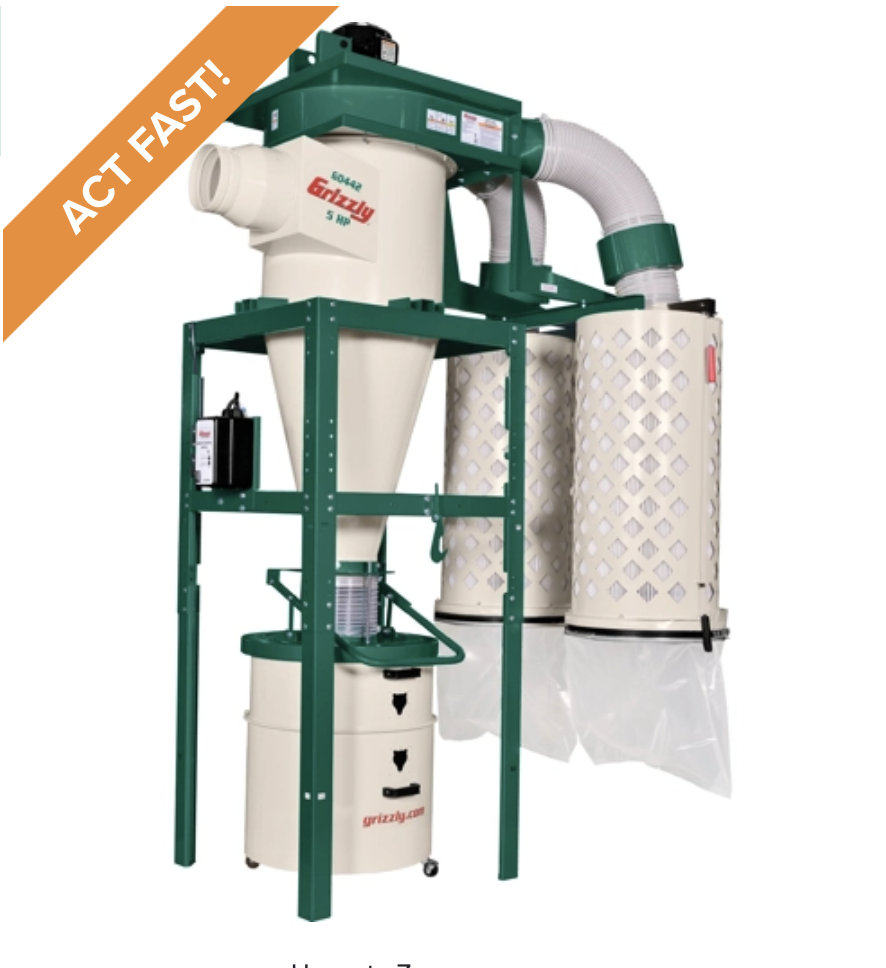
So: bad filtration, and excessive power consumption sounded bad to me. I cancelled the Grizzly order, but it was too late: it had already shipped and was close to me in Reno. I went through some back and forth, and got it sent back under their 30 day guarantee, but I had to pay two way shipping and a 10% restocking fee. So, I lost $1200 on that deal. I’m sure I would have lost more if I kept it and tried to sell it.
I put another capacitor in my existing motor and it seemed to be okay again. Back in 2023 I built a dust collector closet for the machine, and I was wondering if excessive heat was damaging the motor. I was also getting poor filtration; my small HVAC filter was frequently full of fine dust, and some fine dust was escaping out the cracks of the enclosure. The best place for a dust collector is outdoors, or at least venting outdoors, but I can’t do that in my climate. I decided to nix the closet and go for something DIY.
This led me into 3D printing my own solution. Initially I was going to do the project by Capturing Dust with their Horizontal Centrifugal Separator, which is available as a free download: https://github.com/Makerr-Studio/CentrifugalDustSeparator – (NOTE: newer files are behind a paywall) and is based on the work of some other people, notably Pilson Guitars and Under Dunn, but the overall concept is based on the Harvey Woodworking design.
I realized Harvey Woodworking has a new design, their Pro dust collectors, and I thought it looked a lot like something I could replicate with some 3d printed parts and a 5 gallon bucket.
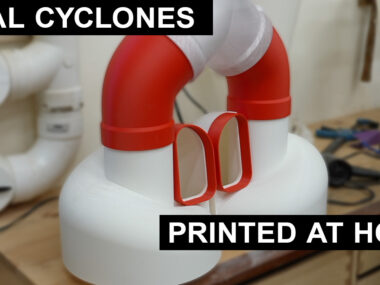
So, I made this contraption, and did some quick tests, and a full video documenting my thoughts and ideas. I also shared the files as a free download: Horizontal Dust Separator CAD/STL Files.
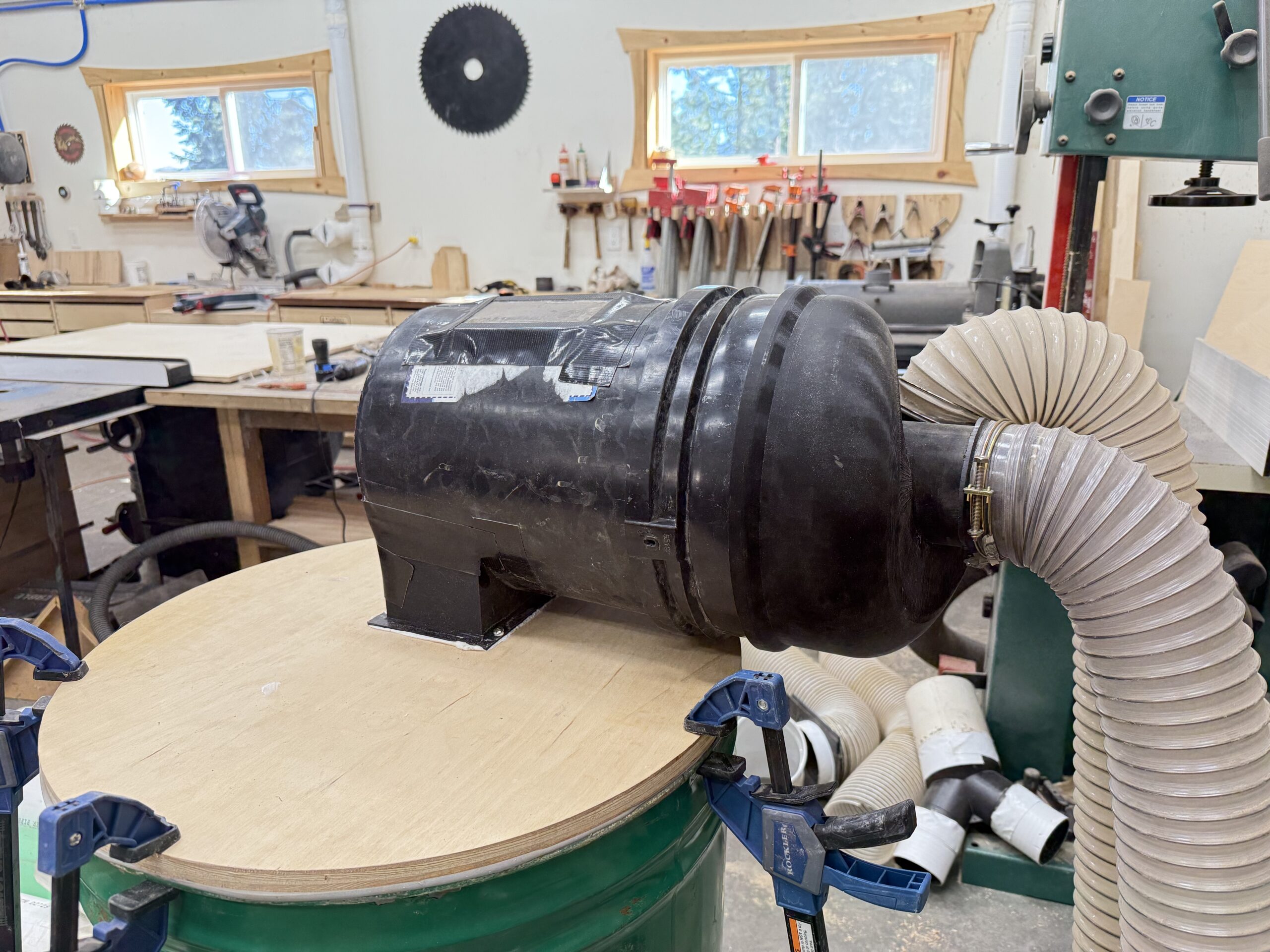
I didn’t feel like it would be effective for my shop, and I have more vertical space than I do horizontal space, so I decided that going “up” with a “traditional” vertical cyclone separator was a better solution. However, printing a single cyclone wouldn’t be possible; it would have to be way larger than what I could print, and breaking it up into multiple pieces would be difficult to print and glue together. So, I opted for a dual cyclone separator design.
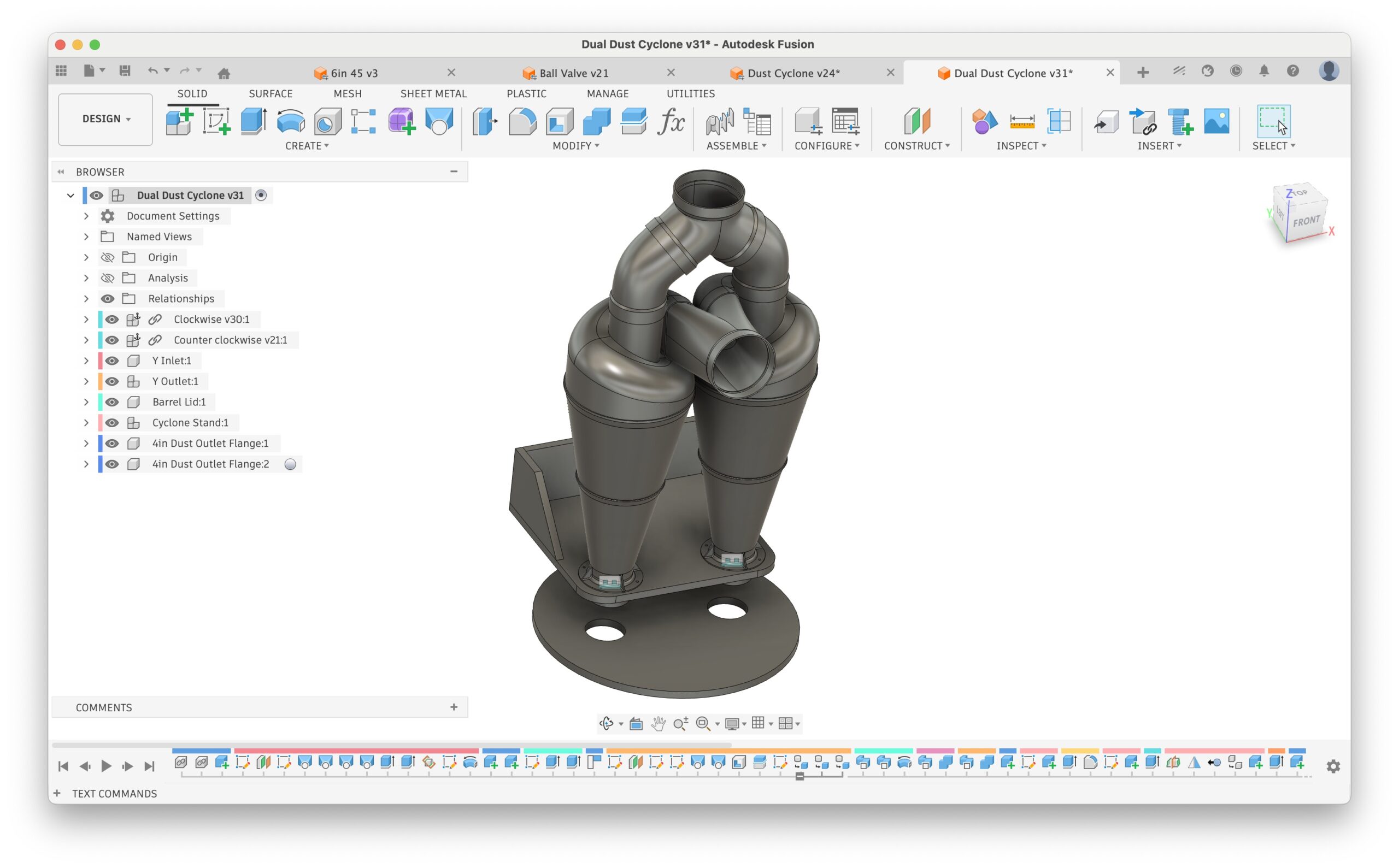
I committed to the dual system and took apart my collector and made it into a DIY hybrid cyclone system. It cost me less than $100 in printed PLA, screws, caulking and a used 55 gallon drum. A quick test shows it at 99.4% efficient..however, the way I measured efficiency wasn’t great, and a slower pickup combined with measuring the passthrough dust will likely show better results.
As usual, you can download the CAD File (Autodesk Fusion 360), STL models for printing, and my 3MF files that I used for actual printing in Bambu/Prusa: Digital Files: Dual Cyclone Separator for 3D Printing